Better sleep in midlife, hopefully
I've never been a morning person.
I worked in Rocky Mountain National Park as a summer gig when I was in college, and my roommate was a 5 foot ball of energy named Lucy.
Lucy wasn't just a morning person.
I quickly learned that being quiet for the 8 or so hours she slept meant that she had a lot of pent up words to use as soon as she opened her eyes.
On more than one occasion, I woke up to find her sitting up in bed, staring at me. The minute she saw the whites of my eyeballs, she would start talking.
Fast. Without taking a breath.
She would talk through the door while I was in the bathroom, and standing next to me at the sink while I brushed my teeth.
I'm not sure, but I think that's Dante's definition of the seventh circle of hell.
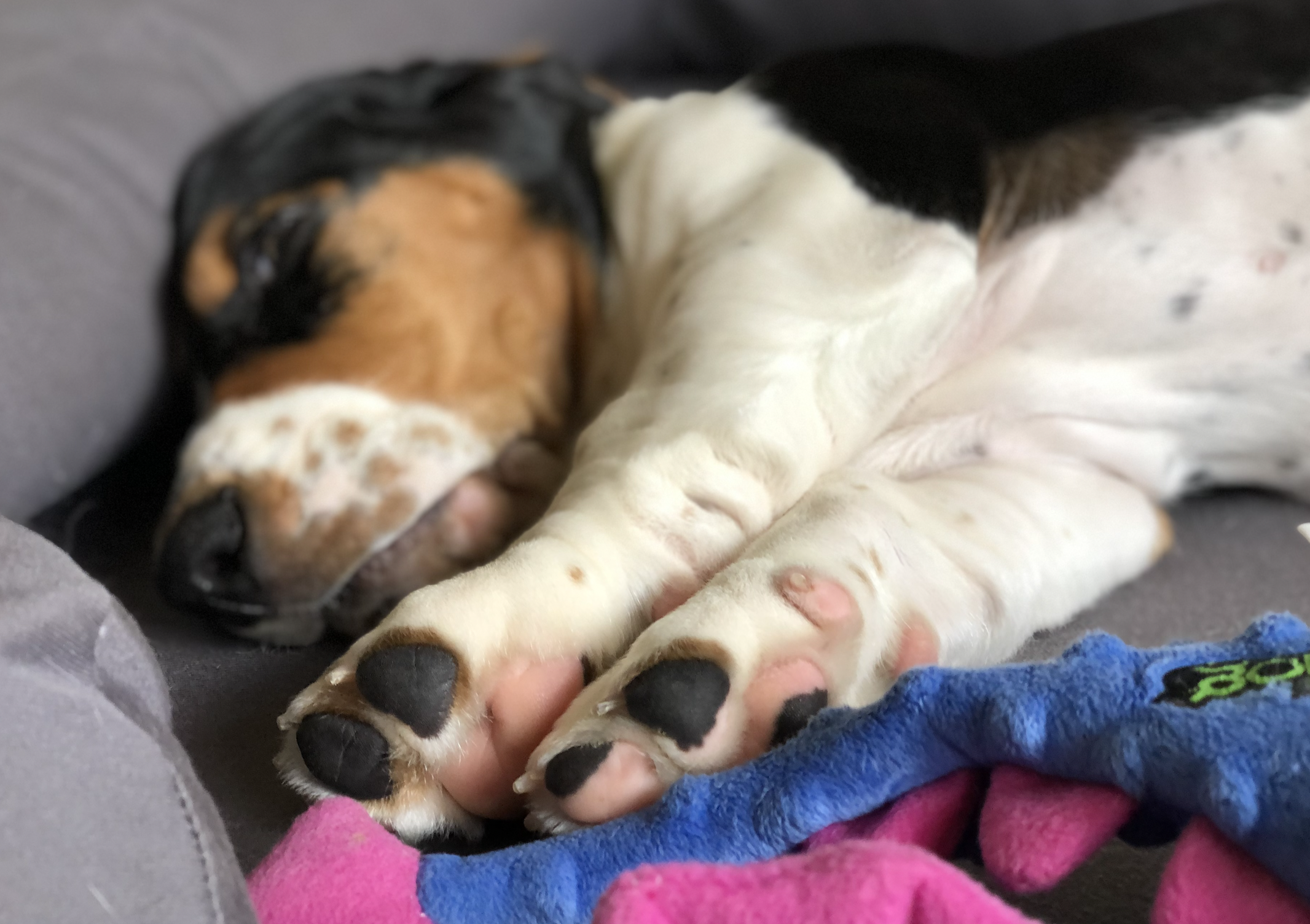
Vinnie has never had trouble sleeping…
I've never been one to jump out of bed in the morning. I've also never slept very well. Sure I use the strategies that I've learned as a sleep coach, but those strategies don't matter if there is an underlying issue.
Last Monday, I finally met with a sleep doctor. After listening to my story, he said four words that almost made me cry.
"We can fix you."
I've been functioning on buckets of caffeine for so long, it's hard to imagine what it might be like to wake up feeling fully rested. But he said something else that surprised me.
"I think you might have obstructive sleep apnea (OSA)."
In general, men have a 30% chance of having OSA, and women just 15%. But, when women enter perimenopause, that risk doubles. Doubles.
Here are some of the symptoms that OSA and menopause share:
Hot flashes or flushes
Night sweats
Insomnia
Snoring
Daytime sleepiness
Fatigue
Mood changes or swings
Depression
Poor concentration
Short-term memory loss/Forgetfulness
Joint or muscle pain
He also informed me that many of the symptoms of ADHD are similar to what you experience with poor sleep.
I'll be sharing more as I go through this journey, but in the meantime, if you are someone who struggles with sleep and have a doctor you trust; maybe it's time to have that conversation.
My at home sleep study didn't show that I had sleep apnea, and had I not requested to meet with a sleep doctor (a pulmonologist read my results), I wouldn't have found any of this out.
My at home study did show, however, that my oxygen levels dipped below 90% for at least 12 minutes, which qualified me for a clinical study in February.